Wired Earbuds Buying Guide: How to Choose the Best Pair (2026)
Wireless earbuds get all the attention, but wired earbuds still win on sound quality, reliability, and value. No charging, no pairing, no latency — just plug in and listen. Here's everything you need to know to pick the right pair.
1. Why Choose Wired Earbuds?
- Better sound per dollar — more of your budget goes to drivers, not wireless chips
- Zero latency — ideal for gaming, video editing, and monitoring
- No battery anxiety — always ready to use
- More reliable connection — no dropouts, no interference
- Universal compatibility — works with any device that has a 3.5mm jack or USB-C port
2. Connection Types
| Connector | Best For | Notes |
|---|---|---|
| 3.5mm (headphone jack) | Laptops, older phones, audio gear | Universal standard, analog signal |
| USB-C | Modern Android phones, tablets | Digital signal, often better DAC |
| Lightning | iPhones (older models) | Apple proprietary |
Tip: If your phone lacks a headphone jack, look for USB-C earbuds or grab a 3.5mm-to-USB-C adapter.
3. Driver Types & Sound Character
- Dynamic drivers — the most common type. Warm, punchy bass. Great for music and everyday listening.
- Balanced armature (BA) — used in hearing aids and audiophile IEMs. Detailed, accurate sound but less bass impact.
- Hybrid (dynamic + BA) — best of both worlds. Found in mid-to-high-end earbuds.
4. Fit & Comfort
Fit affects both comfort and sound quality — a poor seal kills bass and lets in outside noise.
- Ear tip size — most earbuds include S/M/L tips. Try all three; the right size creates a gentle seal.
- Tip material — silicone (durable, easy to clean) vs. foam (better seal, more isolation)
- Over-ear hooks — great for workouts; keeps earbuds secure during movement
- In-ear vs. earbuds — in-ear (IEM) style seals in the ear canal; traditional earbuds rest in the outer ear (less isolation)
5. Cable Features to Consider
- Cable length — 1.2m is standard for phone use; 2m+ for desktop/studio use
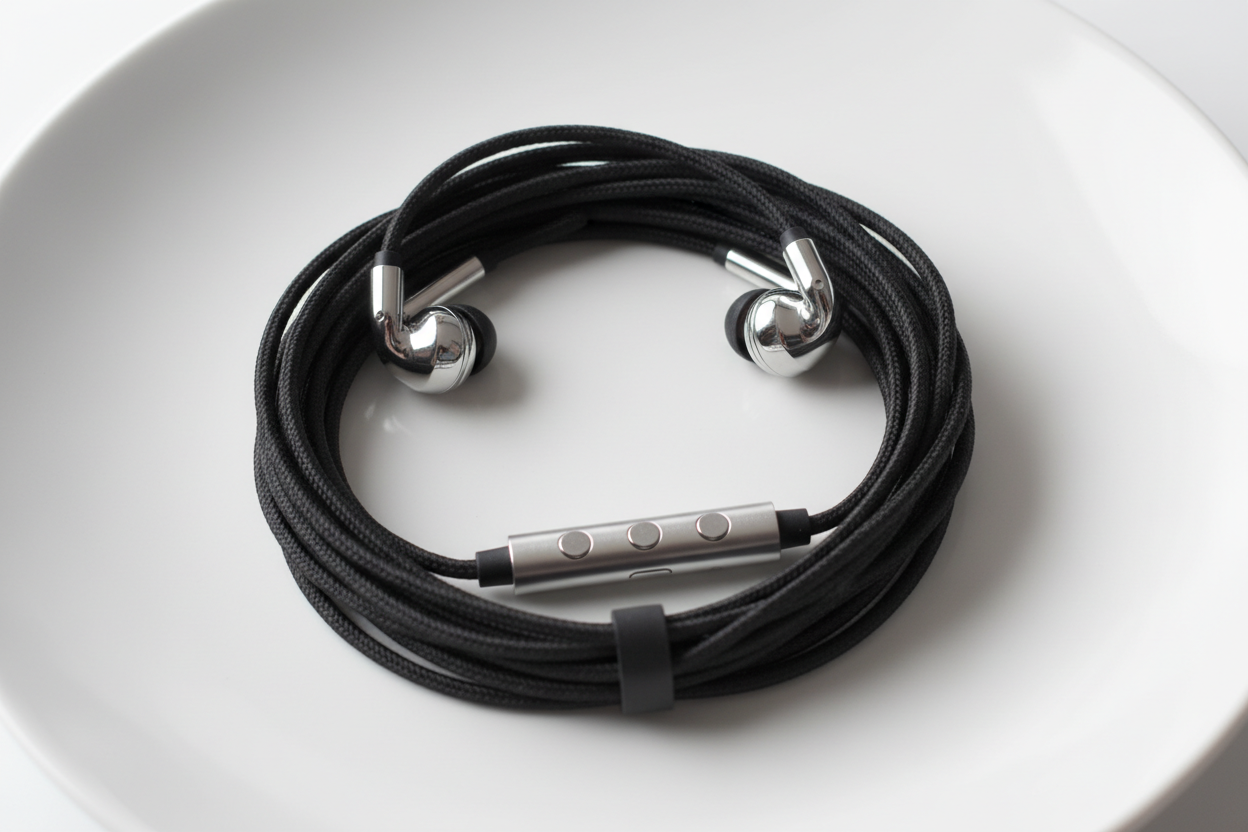
- In-line microphone & remote — essential for calls; look for a 3-button remote for full playback control
- Tangle-resistant cable — flat or braided cables tangle far less than round cables
- Detachable cable — found on higher-end models; extends lifespan significantly
6. Key Specs Explained
| Spec | What It Means | What to Look For |
|---|---|---|
| Impedance | Electrical resistance | 16–32Ω for phones; higher needs an amp |
| Sensitivity | How loud per milliwatt | 95–110 dB/mW is ideal for phones |
| Frequency response | Range of sound reproduced | 20Hz–20kHz covers full human hearing |
| Driver size | Size of the sound element | 8–13mm for earbuds; bigger ≠ always better |
7. Use Case Recommendations
- Commuting / everyday — prioritize comfort, in-line mic, tangle-resistant cable
- Gym / workouts — prioritize secure fit, sweat resistance (IPX4+), over-ear hooks
- Gaming / video — prioritize zero latency (wired wins here), in-line mic quality
- Audiophile listening — prioritize driver quality, impedance matching, wide frequency response
8. Budget Guide
| Budget | What to Expect |
|---|---|
| Under $20 | Basic sound, functional mic, standard tips |
| $20–$50 | Good sound quality, better build, tangle-resistant cable |
| $50–$100 | Excellent clarity, hybrid drivers, detachable cable options |
| $100+ | Audiophile-grade IEMs, premium materials, exceptional detail |
Ready to Shop?
Browse our wired earbud collection:
- Wired Earbuds — curated picks across every budget and use case
Questions about which earbuds are right for you? Our team is happy to help.

Written by Dennis Estelle